

Design Sprint: Google Nest Mini Gifting Experience
Client
Product
Google Nest Mini
Year
2021
Services
Packaging Design
With a 1-week timeline, Leadoff Studio was brought in to partner with Google to explore gifting as a new customer acquisition strategy.
Google Nest customers were gifting the device to friends and family, introducing smart home technology to a new demographic. However, research revealed that gift recipients often opened their new device, but postponed setting it up, sometimes forgetting about it altogether.
The goal was to create a packaging experience that made receiving a Nest Mini special, while building excitement, simplifying the first interaction, and encouraging Nest Mini use right away.


A box that blooms
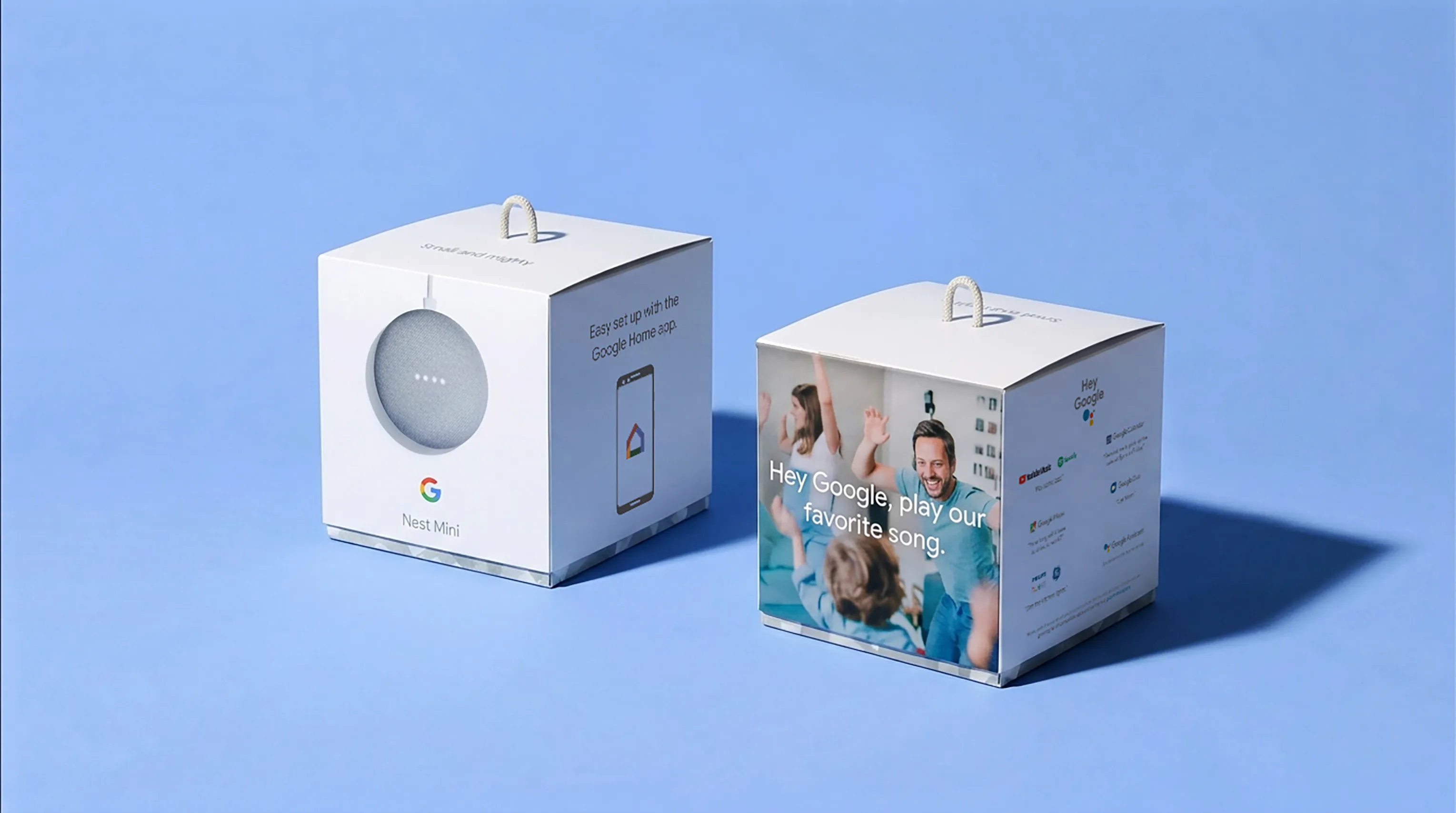
Leadoff developed the "Flower Box," a compact cubic package that transforms into a theatrical product display.
A simple rope handle invites recipients to lift the lid. As the cover rises, four connected walls unfold like flower petals, revealing the Nest Mini elevated at the center. The panels gently bounce as they open, creating a floating, sculptural presentation that makes the device feel truly special.
The familiar gift-box proportions, soft matte finish, and restrained Google graphics create an inviting exterior, while a dedicated gift-sticker space lets the giver personalize the moment.


Designed to encourage interaction
Once opened, the four panels intentionally resist folding back into the box. This ensures that, should the recipient wait to set it up, the Nest Mini remains on display as a gentle reminder of its presence.
Inside, simple messaging and illustrations guide the recipient to plug in the device and download the Google Home app. A fourth panel encourages recycling the packaging, reinforcing the next step of taking the product out and making it part of everyday life.
By removing unnecessary instructions and visual clutter, the packaging makes an unfamiliar piece of technology feel approachable, intuitive, and easy to enjoy.
Thoughtful design,
rapid execution
Given five days to complete the project, Leadoff quickly moved from initial sketch to first physical prototype—built from ordinary printer paper.
The final prototype combined printed matte paper over rigid card stock with a rope pull and Google's existing molded pulp Nest Mini tray. Reusing the original tray maintained a refined presentation while potentially eliminating the need for expensive new tooling.
Leadoff completed the structural design, graphics, print production, and hand assembly in time for the concept to be filmed and presented to Google's team at the end of the week.
The result was an enthusiastically received R&D concept that helped Google's marketing team bring its gifting research to life, demonstrating how a thoughtfully designed unboxing experience could make technology feel personal, memorable, and easier to adopt.


